
Have you ever wondered that taking a gold loan can put your jewellery at risk? For many, gold is more than just metal as it carries pride, financial security, and emotional value. The fear of losing it can be a matter of worry for borrowers. Disputes over defaults and gold return have raised questions about how safe gold truly is with banks and NBFCs. This article highlights that lapses in safety or borrower rights can occur, to make it essential for borrowers to be aware of the rules on repayment, default, and auctions.
| Situation | What happens to gold/Money? |
| You repay on time | Your gold is safe. You can redeem it any time after paying dues. |
| There is default | You will be given reasonable opportunity to make good the defaults. Lender will issue notice regarding likely recovery process. |
| Gold is damaged/lost in custody | Lender is liable to compensate you. |
| Gold is auctioned | Any amount above the amount of money due from you is given to you. Lender only keeps the principal, interest and the charges. |
Recent Supreme Court Intervention
Recently, the Supreme Court restored a FIR/chargesheet against bank officials, which was lodged by the borrower alleging that Bank did not return the Gold stating it to be fake. The SC ruled that a bank cannot re-evaluate gold pledged against a loan after the loan has been repaid.
Safety of our gold.
Generally, the gold is safe if you are making timely payments. However, in case of defaults, the lender has right to recover the dues through auction of gold.
Unregulated unsafe environment of past
In olden times, gold loans were part of unorganised sector, where, lenders use to charge heavily and seize gold in cases of non-payments. Local moneylenders offered quick money without complex paperwork, but often charged exorbitant interest rates with vague and unfair terms. If repayment was delayed, the gold was seized or sold without notice or transparency, leading to loss and distress to the borrower.
Reality of today
Things are different today as the gold loan is regulated by Reserve Bank of India (RBI) with clear sets of rules and directions. RBI regulations technically apply to both gold and silver, financial institutions overwhelmingly prefer gold due to its higher value density and market acceptability. The term silver is missing in the gold loan offers, except for a few exceptions.
Licensed banks, NBFCs (like Muthoot Finance, Manappuram), and cooperative banks follow strict norms on gold lending practices, interest rates, auction procedures, and borrower rights. The RBI directions require transparency in the auction process that includes adequate notice and opportunity to the borrowers to make amendments.
Is your gold safe? Mostly yes — if you repay on time
If you are making regular payments, your gold, in the custody of lender, is safe. RBI directions require that the gold is securely stored in lockers or vaults at the branches manned by its employees. The gold is also insured against loss, thefts, and natural calamities.
Lenders are responsible for the safekeep of the gold and return it once the loan has been paid back. Lenders need to adequately compensate in case of any loss to the gold in their custody. The RBI mandates that lenders must compensate the borrower for any damage or loss while gold is in their possession.
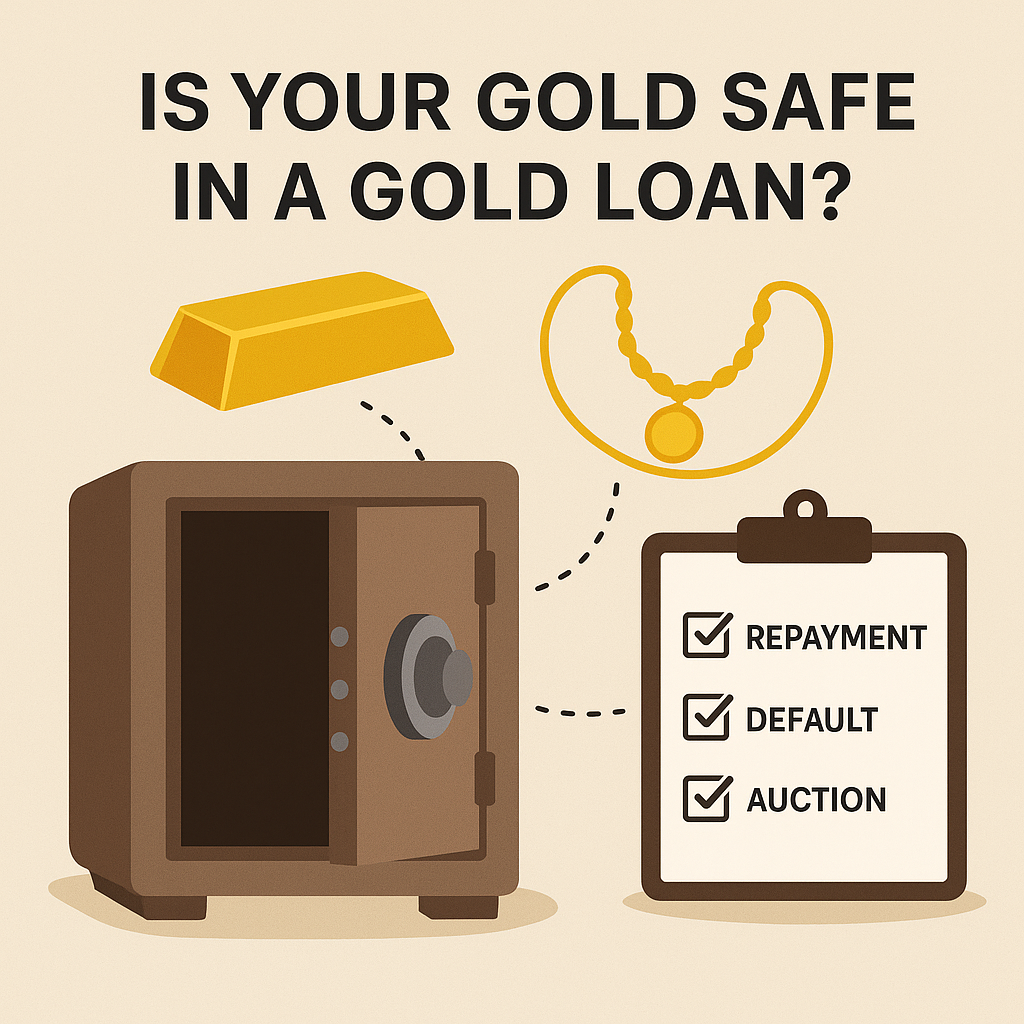
What happens if you do not repay?
If you miss payments or default entirely, the lender has right use gold to recover their dues. But they cannot just seize and sell your gold. Here’s what the RBI directions are on the matter:
- Adequate notice: The lender must give proper written notice to the borrower informing them of the pending dues and the aftermath of non-payment.
- Public notice: If the borrower cannot be reached, the lender has to release a public notice and must wait for at least one month before proceeding with the auction.
- Transparent auction process: The auction must follow a clear process, ensuring that the gold fetches a fair market price. If there’s any surplus after deducting the loan and dues, the same must be provided to the borrower.
Be a responsible borrower
Taking a gold loan can be better to selling gold when you’re emotionally attached to the jewellery and expect to repay soon. (Read article.) However, you must be realistic about your repayment capacity. Do not borrow more than what you can manage comfortably, and always keep track of your dues. Gold loans are short-term — typically for 3 to 12 months — and defaulting can cost you emotionally and financially.
Final thoughts: Respect loan terms
Gold loans are a dignified, quick, and regulated way to raise funds in a crisis. They are no longer the shady or risky option of the past. A lender needs to release the pledged gold held as security to the borrower on the same day but in any case, not exceeding a maximum period of seven working days upon full repayment or settlement of the loan. Just like any other loan, discipline and awareness are the keys to ensuring that your gold returns to your hands.
Also read
Gold loan vs gold sale: Which option is better in a financial emergency? – https://crorex.in/gold-loan-vs-gold-sale-which-option-is-better-in-a-financial-emergency/
Reference
Reserve Bank of India (Lending Against Gold and Silver Collateral) Directions, 2025 – https://rbidocs.rbi.org.in/rdocs/notification/PDFs/47NTEBC6E8C94DFB432797365CA984734797.PDF